Identify triggers, warning signs and plan of care
- General Surgery
- Nov 11, 2024
- 1 min read


Patients with concerning behaviours will now have visual alerts for caregivers. Review the behavioural chart to identify triggers, warning signs and plan of care to minimise risks of violent, aggressive or challenging behaviours.
Visual alert must travel with the patient on bed throughout the hospital.
Place alert with patient's file for privacy whilst being transferred.
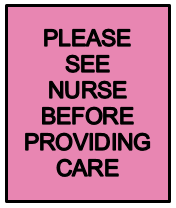
Visual alerts will be placed on the door/bedside and journey board using approved visual alert signage shown below.
KYRAFLOW JOURNEY BOARD
Patient’s name and URN will be coloured pink
SINGLE ROOM SIGN
will be placed on side door of patient’s room.

SHARED ROOM SIGN
will be placed above patients bed in shared room AND the sign is to accompany patient on bed when moving through hospital e.g. to Perth Radiological Clinic.
Process When a Visual Alert is in Place
On identifying a visual alert, caregivers caring for the patient must make themselves aware of the patient's behaviour, triggers, and associated prevention/safety measures as documented on the care plan.
Visitors will be directed to nursing caregivers who can advise of processes for safe visitation.
Consider use of appropriate personal protective equipment (PPE), including personal duress alarm (if available).
Verbal hand overs will describe the behaviour, risk and management plan.
The implementation of a visual alert must be discussed at each shift handover.


Comments